Made-to-measure VCI covers, tote covers and sleeves that keep metal components corrosion-free for up to two years — without oiling, waxing or any coating that has to be cleaned off later.
VCI packaging is our specialist line. We cut, sew and finish corrosion protective covers in Tyvek and Evolon, shaped to the exact component, tote or pallet they enclose — and we have been doing it for the European automotive supply chain for over three decades.
Because every package is patterned to the part, the enclosed air volume stays small, the inhibitor saturates faster and the cover handles cleanly on the line. That matters most where parts sit in storage for months, travel by sea, or move between plants in a returnable loop.
Whether you need one fitted cover for a single gearbox, VCI tote covers for a small-parts programme, or pallet covers for an export batch, the work starts from your dimensions or the physical part — never from a catalogue size.
Request VCI Packaging Quote →

VCI compounds embedded in the packaging material vaporise slowly inside the closed package. The vapour settles on every exposed metal surface — including bores, threads and blind cavities the eye never reaches — as a molecular layer only a few nanometres thick.
That layer interrupts the electrochemical reaction between iron, oxygen and moisture that produces rust. Nothing is applied to the part and nothing has to be removed: when the package is opened, the layer dissipates on its own and the component goes straight into assembly, machining or inspection.
The practical consequence is a shorter process. No oiling station, no wax bath, no degreasing line before assembly, and no solvent waste to dispose of — which is why VCI has displaced oil-and-wrap in most automotive parts logistics across the EU.
Talk to Us About Your Parts →Four formats cover most industrial requirements. Each one is patterned to your part, container or pallet footprint.
Fitted spatial covers for engines, gearboxes, differential units, axles, suspension assemblies, steering racks and chassis parts. Shaped to the contour of the assembly so there is no loose material to snag during crane or forklift handling, and no wasted air volume for the inhibitor to fill.
Covers and liners sized to the KLT boxes, stillages and small-load carriers already running in your logistics loop. Used where hundreds of small machined parts travel together and individual wrapping would be uneconomic. Made with closures suited to repeated opening on the line.
Sewn sleeves and bags for shafts, castings, turned and machined parts, bearings and sub-assemblies. Made in any length and diameter, including long narrow formats that standard film bags handle badly. Evolon is used where the surface must not be marked.
Full-pallet and skid covers for export consignments and long-term outdoor-adjacent storage, sized to the loaded pallet rather than to a pallet standard. The usual choice for sea freight, where the container cycles through condensation every day of the voyage.
The largest VCI application by volume. Powertrain and chassis components move between tier suppliers, OEM plants and spare-part warehouses across the EU, often sitting for months between steps. VCI keeps the surfaces build-ready without an oiling and degreasing cycle at each end.
Precision-machined and anodised parts where any applied coating would have to come off before inspection or assembly. Evolon's non-abrasive microfilament face protects the finish while the VCI protects the metal.
Castings, weldments, hydraulic assemblies and machine sub-units held in stock or shipped as spares. Large, irregular shapes are exactly where a patterned cover beats film wrapping.
Intercontinental shipments where the container goes through a condensation cycle every day. VCI protection runs for the whole voyage and through the warehousing that follows, with no unpacking and re-preserving on arrival.
Customers normally supply the VCI-treated material; we carry out the pattern-making, cutting, sewing and finishing.
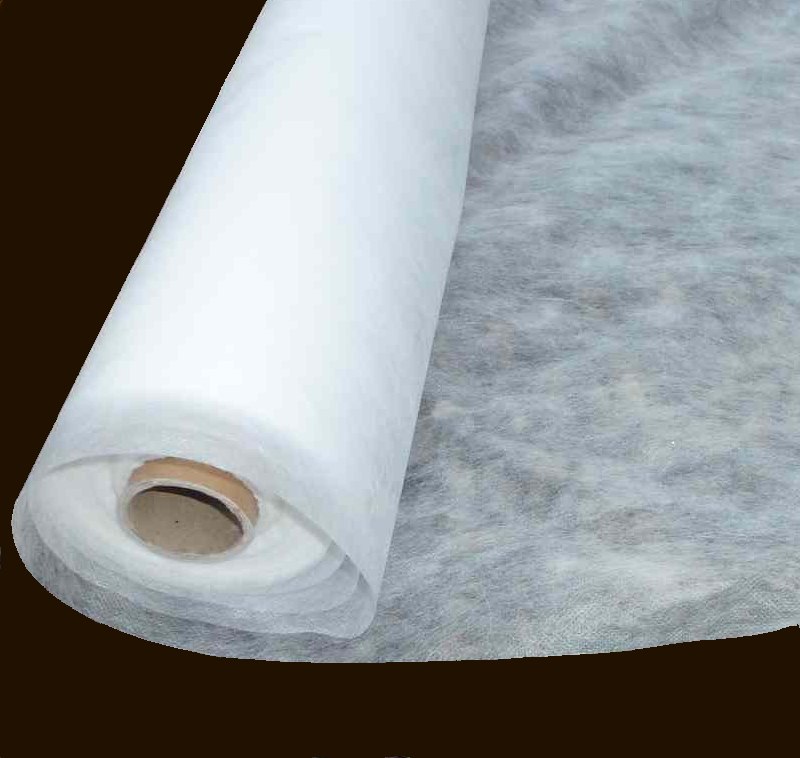
The default carrier for VCI packaging. Water vapour passes through, liquid water and dust do not, and the inhibitor circulates freely inside the package. Light enough that a full engine cover stays easy to handle, and strong enough to survive repeated loop use.
Chosen when the packaging touches a machined, polished, anodised or painted surface directly. The microfilament face is non-scratching and absorbs incidental moisture, which makes it the usual answer for visible parts and precision work.
Used as an inner layer under a VCI cover where a part needs cushioning as well as corrosion protection, or as a breathable dust layer in a two-part packaging system.
Seam reinforcement, handles, hook-and-loop or drawcord closures and grommet points, specified according to whether the package is opened once or a hundred times.